
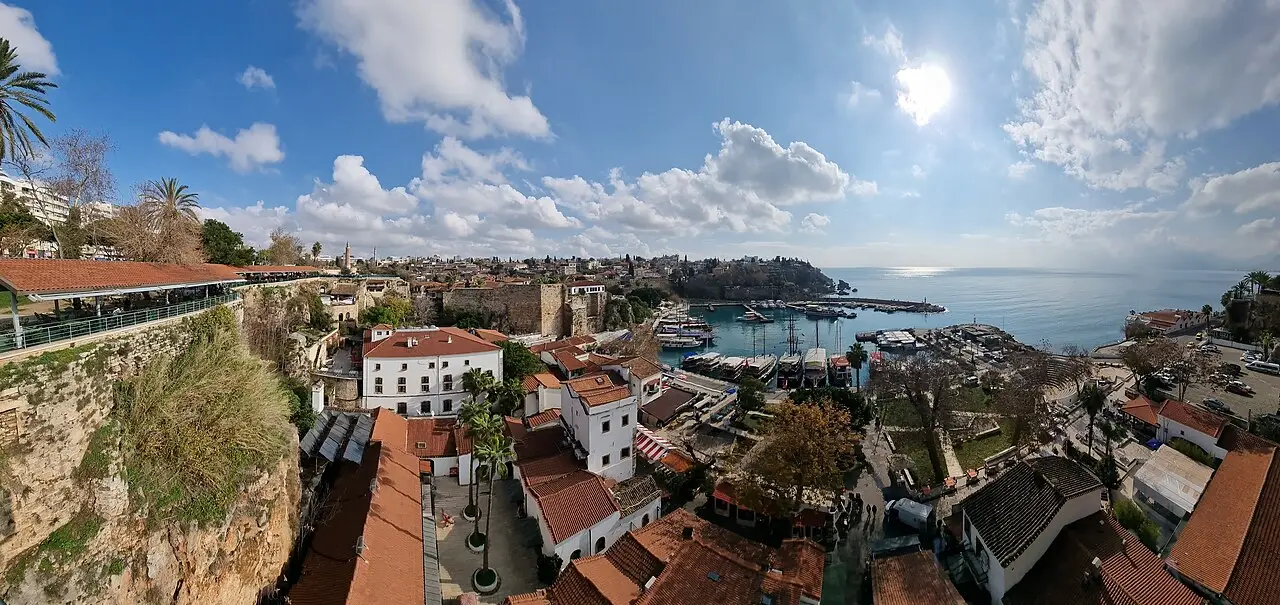

Antalya: a Mediterranean city between the sea and the Taurus Mountains
Antalya lies on the southern coast of Turkey (Türkiye), facing the Gulf of Antalya with the Taurus Mountains rising inland. Its identity comes from this meeting of landscapes: an old harbour beneath the cliffs, historic streets above the water, beaches along the urban coast and mountains forming the wider backdrop.
The name describes both Antalya city and Antalya province. The city is the provincial centre; the province also includes distinct coastal destinations such as Kemer, Kaş, Manavgat and Alanya. Understanding that difference helps place the city’s landmarks within a much larger cultural and natural landscape. The Provincial Culture and Tourism Directorate introduces the districts that make up this region.
The history behind Antalya’s streets and harbour
Antalya’s early history is closely connected to its harbour. The ancient city was known as Attaleia and was founded by Attalos II of Pergamon. Roman and Byzantine periods followed, before the city developed under Turkish rule. Its position beside the Mediterranean made the harbour a central part of the settlement’s story.
Different periods remain visible together in Kaleiçi. Hadrian’s Gate recalls the Roman city, the Yivli Minaret complex represents its Seljuk heritage, and the traditional houses reflect later domestic architecture. These are parts of a historic urban fabric, rather than a collection of unrelated monuments.
The relationship between narrow streets, houses, surviving wall sections and the harbour is what gives the old centre its character. The municipal account of Kaleiçi explains how the quarter developed and how its buildings preserve the city’s historical layers.
The coastline, landscape and Mediterranean climate
Antalya’s shore changes from place to place. Konyaaltı is associated with a predominantly pebble beach, Lara with sandy stretches, and the central coast with cliffs overlooking the sea. The contrast between these settings is an important part of the city’s appearance. The municipal beach and bay guide describes this coastal variety.
The coastal climate has hot, relatively dry summers and a wetter winter period, as shown in Antalya’s official meteorological records. The mountain landscape adds another dimension: the conditions and vegetation inland differ from those at sea level. Antalya’s natural setting therefore includes much more than its beaches.
The areas that give Antalya its character
Kaleiçi and Muratpaşa: the historic heart
Kaleiçi is the historic quarter within Muratpaşa. Its small streets, traditional houses and harbour-facing slopes preserve a different scale from the modern city around it. Hadrian’s Gate, the Yivli Minaret area and the old harbour are among the places that make this part of Antalya recognisable.
Konyaaltı: the western waterfront
Konyaaltı occupies the western side of the city. Its beach and waterfront form a broad coastal setting, with the mountains contributing to the view. The shore and the neighbourhoods behind it show how the Mediterranean is part of Antalya’s everyday urban landscape.
Lara: cliffs, coastal parks and sandy shores
Lara is a name used for several connected coastal settings, rather than one uniform stretch of beach. Cliff-top neighbourhoods and parks, Lower Düden and the sandy coast towards the east give it a varied character. Distinguishing these places helps explain why photographs of “Lara” can show very different landscapes.
| Area | Characteristic setting | Places associated with it |
|---|---|---|
| Kaleiçi | Historic streets and harbour-facing slopes. | Hadrian’s Gate, the Yivli Minaret area and the old harbour. |
| Konyaaltı | A predominantly pebble coast and urban waterfront. | Konyaaltı Beach and its promenade. |
| Lara | Cliff-top coast, parks and sandy beach areas. | Lower Düden, Düden Park and Lara Beach. |
The wider province: distinct towns along the coast
Kemer and Alanya are separate districts of Antalya province; Belek is in Serik, Side is in Manavgat, and Kalkan is in Kaş. Each belongs to the wider regional picture, rather than being a neighbourhood of Antalya city. The official district directory and Kaş and Kalkan tourism brochure provide their geographic context.
Culture, local food and everyday life
Antalya is a living city as well as a place of historic interest. The old harbour, coastal parks and waterfront promenades connect its heritage with contemporary public spaces. Kaleiçi’s compact streets, Konyaaltı’s open shore and Lara’s cliff-top settings give different parts of the city their own atmosphere.
The local table
Antalya-style piyaz is a bean dish distinguished by its sesame-based sauce. Şiş köfte is prepared as skewered meatballs, while citrus preserves reflect another side of the region’s food traditions. Finike oranges connect the wider province’s agriculture with its local identity. These specialities are described in GoTürkiye’s Antalya cuisine guide.
The relationship between coast and hinterland
The city’s setting brings the sea, cultivated lowlands and the Taurus Mountains into the same regional story. The Yörük traditions of the highlands are also reflected in local food culture. This connection helps explain Antalya through its landscape and people, alongside the better-known images of beaches and ancient monuments.
Places to visit in Antalya city
The city’s landmarks reveal different aspects of Antalya: its harbour history, built heritage, coastline and water landscapes. The numbering below organises the places; it is not a popularity ranking.
1. Kaleiçi and Hadrian’s Gate
Hadrian’s Gate is one of the most recognisable entrances to the historic centre. Beyond it, Kaleiçi’s lanes bring together houses, courtyards and monuments from different periods. The Yivli Minaret area adds the Seljuk layer to the old town’s identity. The municipal Kaleiçi guide explains this architectural setting.
2. The Old Harbour and Karaalioğlu Park
The old harbour shows Antalya’s close relationship with the sea from below the historic quarter. Above the waterfront, the Hıdırlık area and Karaalioğlu Park offer a different view of the coast. Harbour, cliffs and parkland together make this one of the city’s defining landscapes. GoTürkiye’s city overview describes the harbour and park.
3. Konyaaltı Beach
Konyaaltı is one of the clearest expressions of Antalya’s coastal character: a long waterfront, a predominantly pebble shore and the Mediterranean in front of the city. Its open promenade contrasts with the enclosed streets of Kaleiçi. The municipal coast guide describes the beach’s setting.
4. Lara Beach
Lara’s sandy shore offers a contrasting coastal landscape to Konyaaltı. It is also distinct from the cliff-top areas that share the Lara name. Looking at these settings together reveals how Antalya’s coast changes from elevated parks and rocky edges to open beach areas.
5. Lower Düden Waterfall and Düden Park
Lower Düden is the point where the river drops over the coastal cliffs into the Mediterranean. The meeting of freshwater, rock and open sea makes it a distinctive natural landmark. Düden Park places the waterfall within the city’s coastal landscape. The Ministry of Culture and Tourism’s Düden account explains the river’s course.
6. Upper Düden Waterfall
Upper Düden presents the inland side of the same water landscape, with greenery, rock and flowing water forming the main setting. It is a separate place from the waterfall at the coast. The contrast between the two shows how the Düden system links Antalya’s inland landscape to the sea.
Ancient cities and natural settings in the wider Antalya region
The province’s heritage continues beyond the modern city. Ancient streets, theatres, mountain settlements and coastal ports show different relationships between people and the landscape.
7. Perge
Perge, in the Aksu area, gives a sense of an ancient city’s urban scale. Its colonnaded street, baths, public spaces and stadium remains reveal how different parts of a settlement were connected. The interest lies in the city plan as a whole, as well as in individual buildings.
8. Aspendos
Aspendos is associated with its Roman theatre and aqueducts, but it was also a city linked to trade through the Köprüçay river. Reading these structures together gives a fuller picture of its architecture, engineering and economy. The Ankara University excavation project explains that wider context.
9. Termessos
Termessos brings ancient settlement into a mountain landscape. Its ruins and theatre setting differ markedly from the coastal cities and lowland sites. The surrounding terrain is part of its identity, making the relationship between architecture and topography central to understanding the place. The official Termessos profile describes that setting.
10. Phaselis
Phaselis, near Tekirova, was a port city whose harbours shaped its role in Mediterranean trade. Its ancient street, public buildings and shoreline can still be understood together. The Ministry’s Phaselis description explains how the harbours and surviving remains relate to one another.
11. Side
Side, in Manavgat, is a coastal settlement where an ancient urban landscape and a present-day town meet. Its peninsula, streets and monumental remains express its history as a port. It belongs to the province’s wider heritage, rather than to central Antalya.
12. Olympos and Çıralı
Olympos combines the remains of an ancient port with a green coastal setting. Nearby Çıralı adds a beach landscape associated with nesting sea turtles. Together they show why the region’s cultural heritage and natural environment are closely connected. GoTürkiye’s regional guide introduces these sites alongside Perge, Termessos and Side.
Questions about Antalya
What is Antalya known for?
Antalya is known for its Mediterranean coastline, Kaleiçi historic quarter, old harbour, beaches and Düden waterfalls. The wider province adds ancient cities such as Perge and Aspendos. Together, these places express the region’s combination of history and natural landscapes.
Is Antalya a city or a province?
Both. Antalya is a city and the name of the province it centres. Alanya, Kemer, Kaş and Manavgat are among the province’s other districts. They share the provincial name while retaining their own places, landscapes and histories.
Which historic places help explain Antalya?
In the city, Kaleiçi, Hadrian’s Gate, the Yivli Minaret area and the old harbour show different historical layers. Perge, Aspendos, Termessos, Phaselis, Side and Olympos extend that story across the province. The history section introduces the city’s development.
Are Antalya’s beaches sandy or pebbly?
Antalya has different kinds of shore. Konyaaltı is predominantly pebbly, Lara includes sandy stretches, and parts of the central coastline are cliffs. This variety is part of the city’s geography, rather than one continuous type of beach.
What is the difference between Upper and Lower Düden?
Upper Düden is an inland waterfall setting with greenery and rock. Lower Düden is where the river drops over the coastal cliffs into the Mediterranean. They are distinct places within the city’s natural landscape.
What local food is associated with Antalya?
Antalya-style piyaz with its sesame-based sauce, şiş köfte and citrus preserves are examples of the local food tradition. Finike oranges and the highlands’ Yörük food culture also form part of the wider province’s culinary identity.
Content responsibility: Turkey House. This city introduction draws on official regional, municipal, cultural and archaeological sources. It presents Antalya’s identity and places of interest; current visitor conditions remain with the responsible institutions.