Turkey House

ABOUT DEMRE

Demre, Antalya: Myra, Saint Nicholas & the Lycian Coast

Discover Demre through Myra’s rock-cut tombs, Saint Nicholas’s church, the ancient harbour of Andriake and the coastal settlements around Kekova.

Demre, Antalya: Myra, Saint Nicholas & the Lycian Coast

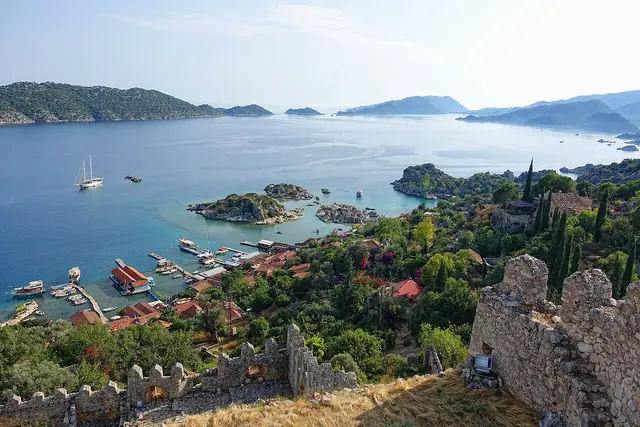
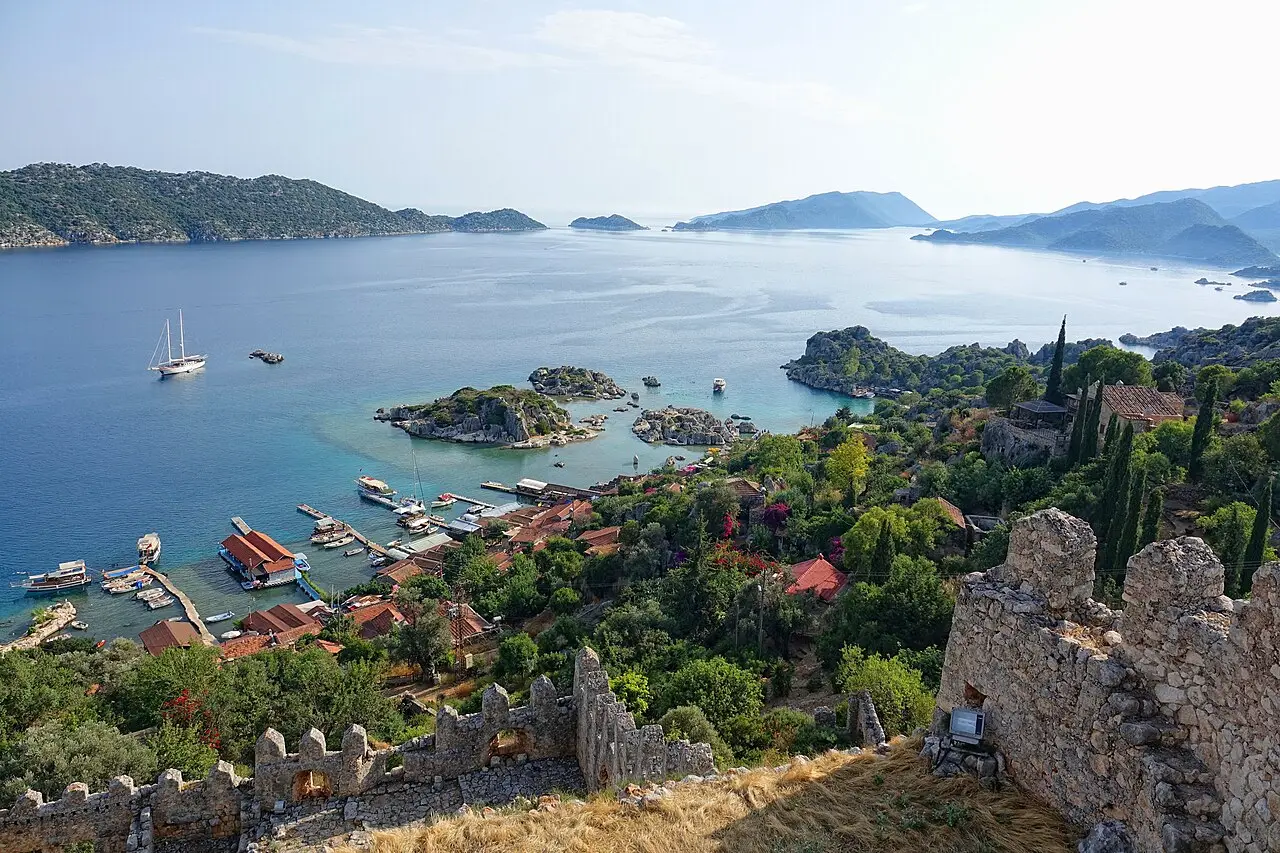
Photo: Kaleköy and the Kekova coastal landscape, Demre · Bjørn Christian Tørrissen · CC BY-SA 4.0 · Photograph source. Resized; may be cropped for display.

Location
Demre · Antalya · Türkiye
Landscape
Lycian Mediterranean coast
Regional airport
Antalya (AYT)
Character
Archaeology, agriculture & coastal villages

Getting to know Demre

Demre is a district on Antalya’s western Mediterranean coast, between the wider Kaş and Finike areas. Its plain, surrounding slopes and coastal inlets belong to the historical landscape of Lycia. Modern Demre and ancient Myra are closely connected, but the archaeological sites are distinct places within the district.

The relationship between inland settlement and the sea is a useful thread. Myra developed beside the plain; Andriake served as its harbour. Saint Nicholas adds another historical layer through the religious history of Myra. Farther along the coast, Üçağız and Kaleköy introduce the sheltered maritime landscape associated with Kekova.

History and local character

Myra is known for Lycian rock-cut tombs and its Roman theatre. The tomb façades cut into the rock make the terrain itself part of the built heritage. Saint Nicholas served as bishop of Myra, which is why Demre has such a strong connection with his story. That connection should not be confused with his birthplace, Patara, in today’s Kaş district.

Landscape and local life

Demre is also a working district with cultivated land around its modern settlements. Its identity comes from the proximity of agriculture, ancient sites and the coast. It is more informative to understand how these settings connect than to group every landmark under the single phrase “sunken city”. Myra, Andriake, Simena and Kekova refer to different sites or areas.
Places and landscapes to explore

Myra’s theatre and rock-cut tombs

Myra’s theatre and rock-cut tombs

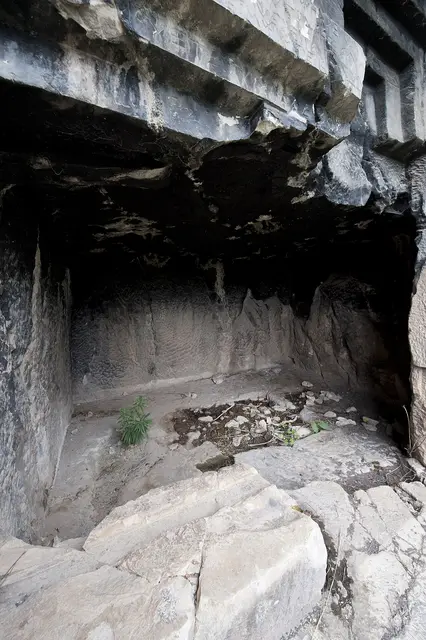
The theatre and tombs reveal different aspects of the ancient city. The theatre expresses public life at a large scale; the tomb façades show Lycian funerary architecture within a steep rock face. Their setting helps explain why the archaeological remains are so closely associated with the surrounding landscape.

Photo: Rock-cut tombs at ancient Myra, Demre · Dosseman · CC BY-SA 4.0 · https://commons.wikimedia.org/?curid=93189085 · https://creativecommons.org/licenses/by-sa/4.0 · Resized; may be cropped for display.

Saint Nicholas Monument Museum

Saint Nicholas Monument Museum

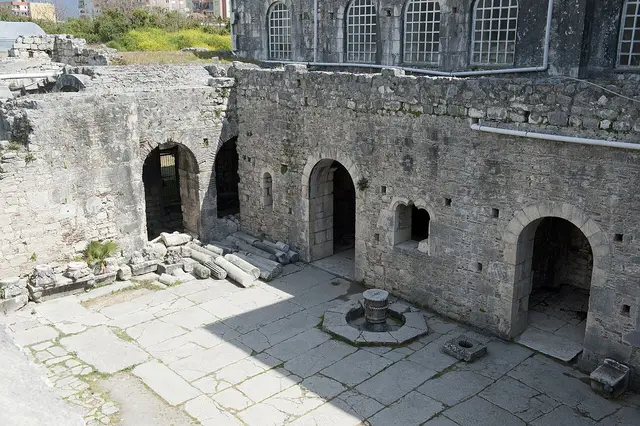
The church associated with Saint Nicholas is central to Demre’s religious heritage. It connects the modern district with Myra’s role as a bishopric and with a historical figure whose traditions spread far beyond Lycia. It is a separate monument from Myra’s theatre and tombs.

Photo: The courtyard and church at the Saint Nicholas monument in Demre · Dosseman · CC BY-SA 4.0 · https://commons.wikimedia.org/?curid=77382260 · https://creativecommons.org/licenses/by-sa/4.0 · Resized; may be cropped for display.

Andriake and the former harbour

Andriake and the former harbour

At Çayağzı, the remains of Andriake explain Myra’s connection with maritime trade. The granary, harbour-related structures and changing water landscape help tell the story. The ancient harbour is no longer an active equivalent of its former self; the surrounding wetland is part of the site’s later history.

Photo: The granary building at ancient Andriake, Demre · Dosseman · CC BY-SA 4.0 · https://commons.wikimedia.org/?curid=88760811 · https://creativecommons.org/licenses/by-sa/4.0 · Resized; may be cropped for display.

Üçağız, Kaleköy and the Kekova area

Üçağız, Kaleköy and the Kekova area

These coastal settlements introduce a different scale of Lycian heritage, with sheltered water, ancient remains and village settings. Kaleköy is associated with ancient Simena. Kekova is a wider coastal area as well as an island name, so individual sites should be identified rather than treated as one interchangeable attraction.

Photo: Kaleköy and the Kekova coastal landscape, Demre · Bjørn Christian Tørrissen · CC BY-SA 4.0 · https://commons.wikimedia.org/?curid=81821037 · https://creativecommons.org/licenses/by-sa/4.0 · Resized; may be cropped for display.

Questions about the area

Which historic places make Demre worth visiting?

Myra’s rock-cut tombs and Roman theatre, the church associated with Saint Nicholas and the ancient harbour of Andriake explain different parts of Demre’s history. The coastal settlements around Üçağız and Kaleköy add another Lycian setting. They are separate places, rather than one combined archaeological site.

What is Demre known for?

Demre is associated with ancient Myra, its Lycian rock-cut tombs and Roman theatre, and Saint Nicholas, who served as bishop of Myra. Andriake was the city’s harbour. Nicholas’s birthplace, Patara, is in today’s Kaş district, so the two parts of his story should be distinguished.

Official local reference

Continue exploring Antalya

Ask about the area

Tell us which part of Antalya interests you and what you would like to know about the local area or available properties.

Tell us what you are looking for

Our team will help you find a property that suits your plans.

Turkey House · Contact us

Tell us what you are looking for

Our team will help you find a property that suits your plans.